
The mother of all medicines
Āyur (life) + veda (knowledge)Considered the mother of all medicines, Ayurveda was born in India thousands of years ago and is one of humanity's oldest medical traditions.
It is neither an isolated therapy nor a fashion. It is a complete medicine, with its own diagnosis, herbal pharmacology, nutrition and way of understanding the human being. It is recorded in classical texts such as the Charaka Samhita and the Sushruta Samhita, and has been passed down from master to disciple, generation after generation.
For millennia, millions of people have trusted this wisdom to live longer and better. It is knowledge observed, tested and refined across countless human lives, and it is this experience we honour in every consultation and every treatment.
Ayurveda, the «science of life», sees body, mind and spirit as a whole. Health comes from the balance of the three doshas, Vata, Pitta and Kapha, the energies that govern each person in a unique way. That is why, in Ayurveda, no two treatments are the same.
Panchakarma is the heart. Ayurveda is much more.
The term Panchakarma refers to the five core actions of deep purification. But classical Ayurveda is a vast, complete medical system, with hundreds of techniques, therapies and procedures for prevention, treatment and rehabilitation (Chikitsa).
Snehana and Svedana
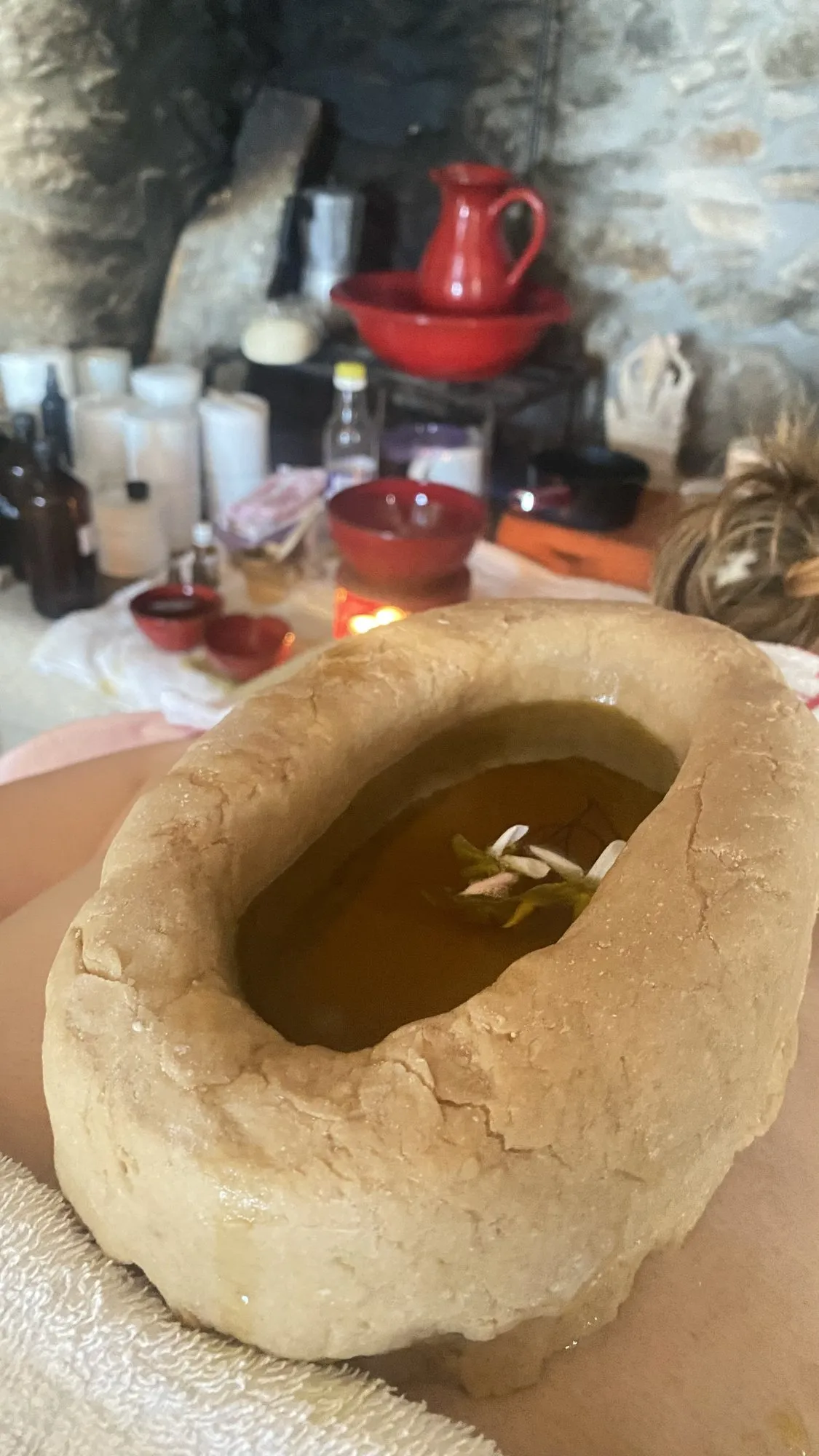
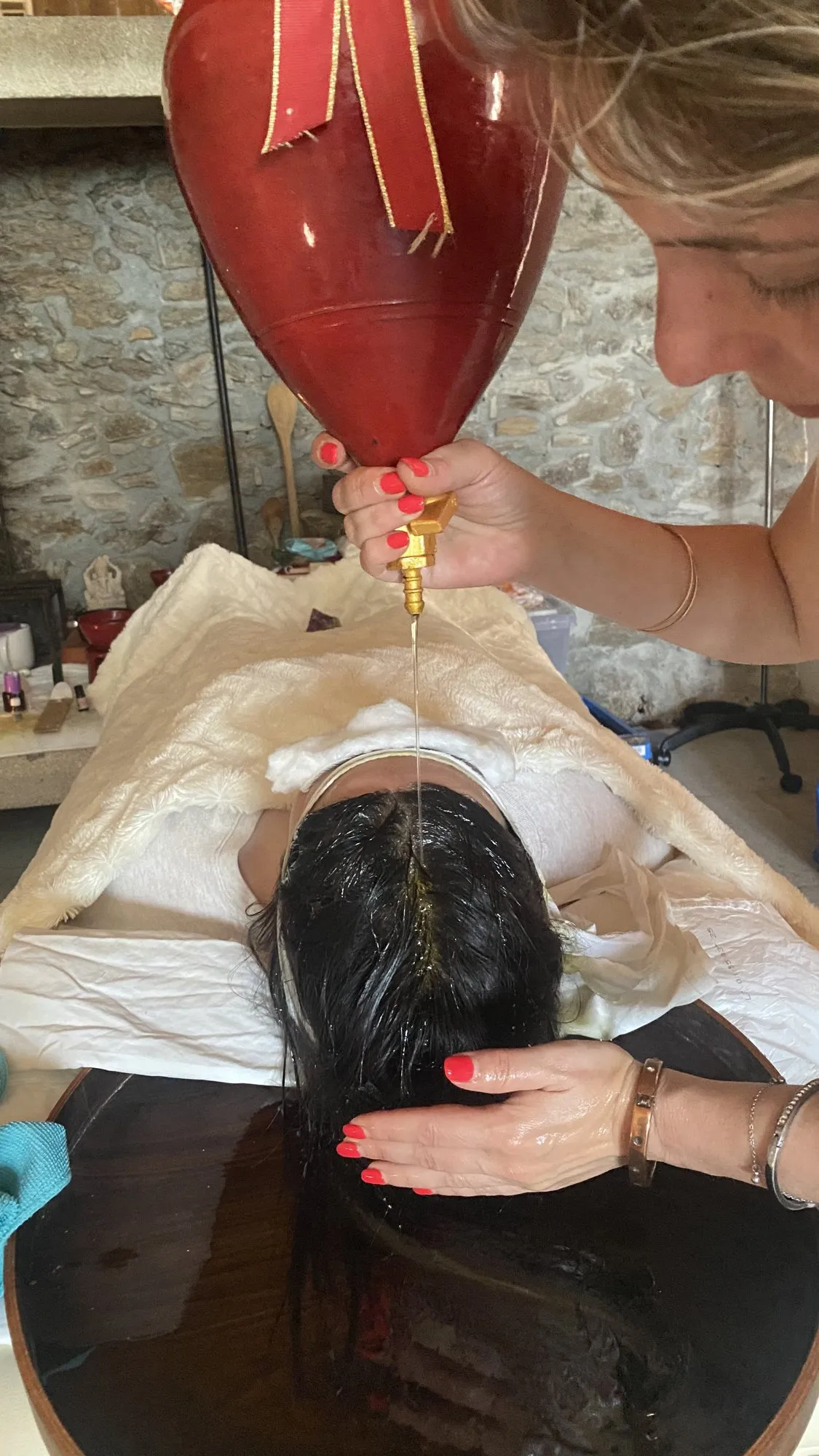
Dozens of therapeutic massage techniques, steam baths, sweating with heated herbal poultices (Pinda Sveda) and oil pools held on the head (Shirodhara, Shiro Basti) or lower back (Kati Basti).
External and local therapies
Medicinal herbal pastes (Lepa), plasters, compresses and medicated oils applied to vital points (Marma).
Eyes, ears, nose and throat
Specific techniques from Shalakya Tantra, such as ghee baths for the eyes (Tarpana), ear cleansing and medicinal fumigation (Dhumapana).
Rejuvenation and vitality
Rasayana and Vajikarana: hundreds of formulations, specific diets and longevity practices to nourish the tissues (Dhatus) and strengthen immunity (Ojas).
The heart of Ayurvedic purification
Panchakarma is a set of five therapeutic procedures that release toxins accumulated in the deep tissues (Ama) and restore the body's balance.
As a deep purification process, it depends on careful preparation of the body, through oleation and sweating, and on attentive guidance by a therapist trained in Ayurveda.
Safety that comes from rigour
In Panchakarma, safety comes from the care with which each step is prepared and adapted to you.
- I
Individual prior assessment
The plan is designed for you, based on pulse and tongue examination, your lifestyle and the test results, medication and supplements you send us.
- II
Herbs chosen for you
Herbs and doses are adjusted to your constitution and your condition, so as not to overload the body.
- III
The right moment
The therapist assesses whether this is the right time for your Panchakarma. Throughout the retreat, she listens to every suggestion and feeling, and adapts the treatments so you feel safe, comfortable and supported at every step.
Panchakarma works on the body, but does not stop there
By purifying the body, it also touches the mind and emotions. Many people describe a change in the way they feel, think and look at their lives.
Changes begin early
The first changes are already noticeable during preparation. During Panchakarma they become more evident.
What was held comes to the surface
Old emotions and issues may emerge, sometimes with some emotional discomfort and, more rarely, physical. It is part of the cleanse: the process works as a catalyst that helps to resolve and release.
Everyone reacts in their own way
Joy, lightness and relief, but also sadness or tiredness. All these reactions are signs that the body is releasing what it no longer needs.
You are never alone in this
Daily meditation and ThetaHealing help you move through these moments with awareness. Share with us everything you feel, especially anything unusual: that is how we adapt your support.
The effects continue afterwards
In body, mind and emotions, for weeks and sometimes months. That is why integration matters so much: we follow your process for 3 weeks after you return home, explaining each change as it comes.
When we need to assess first
There are some situations in which your body is not yet ready for Panchakarma, or in which it needs to be postponed or adapted. That is why no retreat begins without an assessment.
Conditions to be assessed by the therapist
- Pregnancy or breastfeeding
- Menstruation during the retreat dates (some treatments are adjusted)
- Active cancer
- Heart disease, such as angina or heart failure
- Any active infectious disease
- Emaciation
- Morbid obesity
- A situation requiring urgent medical care
- Frailty that prevents you from looking after yourself independently
If any of these applies to you, it does not necessarily rule out a path with us: at the assessment, we find the right answer for your case.
We advise against buying non-refundable travel before receiving the therapist's confirmation.
Ayurveda is a profound way of caring for overall health, reducing stress and regenerating the body, a tradition that still makes sense thousands of years later.